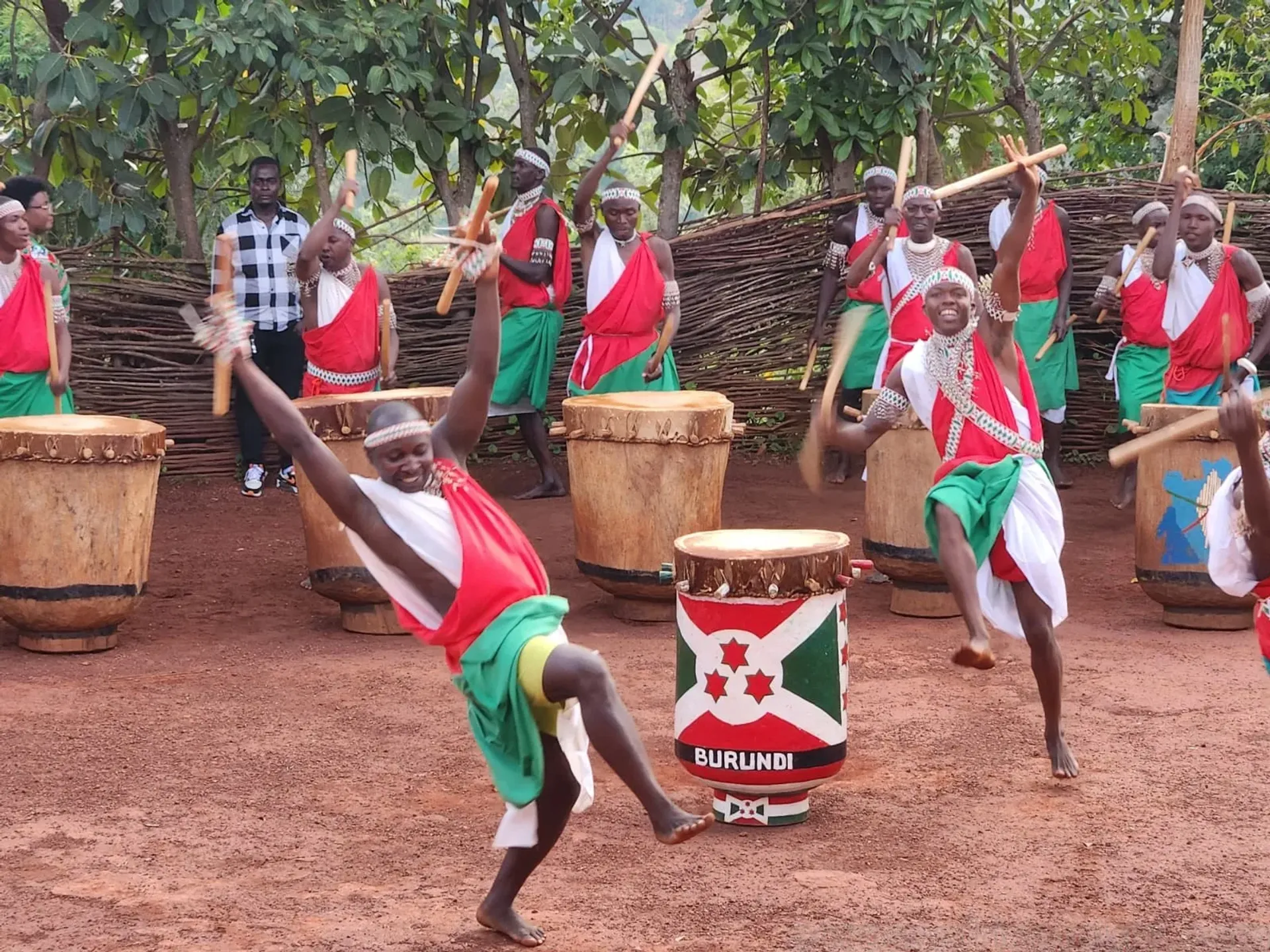
The Sound That Defines a Nation
There is nothing in East Africa quite like the sound of the Royal Drummers of Burundi performing at the Gishora Drum Sanctuary. The low, rhythmic thunder of the karyenda — the sacred drum at the heart of Burundian royal culture — carries across the hilltop sanctuary and settles somewhere deep in your chest long after the performance ends.
The drummers of Burundi are not a tourist show. They are the living practitioners of an art form that the UNESCO Intergovernmental Committee for the Safeguarding of the Intangible Cultural Heritage recognised as Intangible Cultural Heritage of Humanity — one of the most powerful designations any living cultural practice can receive.
This guide covers everything you need to know to visit Gishora respectfully, meaningfully, and on your own terms.
What Is Gishora?
Gishora is a hill in Gitega Province, approximately 100 km northeast of Bujumbura — a 1.5 to 2 hour drive. Gitega itself is Burundi’s political capital (it replaced Bujumbura as the official government seat in 2019) and the country’s second city.
The sanctuary sits on a sacred royal hill — a musumba — that was historically the residence of the Burundian mwami (king). The drums themselves (ingoma) were not merely musical instruments in the Kirundi cultural worldview. They represented the living presence of the mwami’s power, the fertility of the land, and the continuity of the Burundian kingdom.
The largest drum, the karyenda, was believed to hold the soul of the king himself.
The UNESCO Designation
The Drum Ceremony of Burundi (Umudiho w’ingoma, or the integrated practice relating to the sacred royal drum in Burundi) was inscribed on the UNESCO Representative List of the Intangible Cultural Heritage of Humanity in 2014.
The inscription covers:
- The making of the sacred drums (hollowed fig tree trunks, covered with cowhide)
- The ceremonies and protocols surrounding when and how drums are played
- The oral traditions, songs, and knowledge transmitted from master drummers to apprentices
- The social role of the drummers in royal ceremonies, harvest celebrations, and community gatherings
There are several drum sanctuary sites in Burundi — Gishora, Mugamba, Kakiriro, Nyabikere, and others — but Gishora is the most accessible and the most active for tourist visits.
What to Expect at a Performance
A Gishora performance is not a fixed daily show with a set time. It is organised on request, typically for tour groups or individual travellers who book in advance. East Africa Bridge Tours coordinates all timings directly with the sanctuary directors.
The Ceremony Structure
The procession: Drummers enter in a procession, each carrying their drum on their head — a feat of balance and strength that signals the ceremonial beginning.
The playing formation: Drums are arranged in a crescent or circle formation. Each drummer plays standing, their instrument raised and struck with curved wooden beaters. The physical stamina required is extraordinary — some drummers play for 30–45 minutes continuously.
The rhythmic repertoire: The ensemble uses interlocking polyrhythmic patterns derived from royal ceremonial traditions. Each rhythm has a specific meaning — war, harvest, celebration, mourning.
The lead karyenda: The largest central drum carries the main pulse. The surrounding instruments create layers of rhythm that build to an overwhelming sonic peak.
Interaction: At most performances, visitors are welcomed — even encouraged — to attempt a rhythm under a drummer’s guidance. This exchange is joyful and genuine, not performative.
Duration: A typical tourist performance lasts 45–90 minutes.
Photography
Photography and video are permitted during performances. A respectful contribution to the sanctuary beyond the entrance fee is appropriate. Do not photograph individual drummers without acknowledgment — a nod, a gesture, is enough.
Combining Gishora with Gitega
A full-day Gitega itinerary can include:
Morning:
- Gitega National Museum — Burundi’s oldest and most important museum, with royal regalia, traditional weapons, and ethnographic collections. Allow 1–1.5 hours.
Midday:
- Lunch at one of Gitega’s local restaurants in the central market area (try boeuf à la braise with ugali — a staple Burundian meal)
Afternoon:
- Gishora Drum Sanctuary performance — typically arranged for early afternoon with advance booking
- The sacred fig tree on the sanctuary grounds — centuries old, deeply connected to the drum tradition
Late afternoon return:
- Return to Bujumbura — approximately 1.5–2 hours depending on road conditions
Getting to Gishora from Bujumbura
Private Transfer (Recommended)
East Africa Bridge Tours operates private 4WD transfers from Bujumbura to Gishora. The journey takes approximately 1.5–2 hours on the RN1 highway. The road is fully tarred for most of the route and passable year-round.
East Africa Bridge Tours day trip cost: From USD 95 pp (group of 2+), inclusive of private 4WD, fuel, local guide, sanctuary entry, and museum entry.
Public Minibus (Independent Travellers)
- Take a minibus from Bujumbura’s Ngagara or Municipal bus station toward Gitega. Journey time: approximately 2–2.5 hours. Cost: ~BIF 5,000–7,000 (approximately USD 2–3).
- From Gitega town centre, hire a moto-taxi or shared taxi to Gishora hill (~10–15 minutes, ~BIF 2,000).
- Note: Public transport does not coordinate with sanctuary performance times. You must pre-book the performance regardless of how you travel.
Entry Fees and Booking
- Sanctuary entrance: ~USD 10–15 pp contribution (fees support the drummers directly and the upkeep of the sanctuary)
- Performance fee (group): Arranged through a licensed tour operator — East Africa Bridge Tours includes this in all Gitega day trip packages
- National Museum of Gitega: ~USD 3–5 pp
All bookings through East Africa Bridge Tours include pre-coordination with the sanctuary director to confirm performance timing and group size.
Best Time to Visit
The sanctuary is accessible year-round. The dry seasons — June to September, and December to January — offer the most reliable road conditions and the most comfortable visit, as Gitega is at higher altitude than Bujumbura and can be overcast and cool during the rainy season.
Performances can be arranged throughout the year, but public holidays and national events may affect availability. East Africa Bridge Tours advises booking at least 48 hours in advance.
Cultural Respect: What to Know Before You Go
- Remove hats when entering the main sanctuary area
- Ask before touching the drums — you will usually be invited, but waiting to be invited shows the appropriate respect
- The drummers are professional performers who take their cultural role seriously. Applause is appropriate and appreciated; tips/contributions are welcomed at the end
- Drums are not souvenirs and cannot be purchased. Small crafts may be available from market sellers near the sanctuary
For Schools and Groups
Gishora is an exceptional cultural education site for school groups. East Africa Bridge Tours can coordinate educational programmes with presentations from the drummers on the history and social significance of the drum tradition in Kirundi culture. Advance planning of at least 2 weeks is required.
Frequently Asked Questions
Can I visit Gishora without a tour operator? You can reach Gishora independently by public minibus. However, performances must be pre-booked in advance — there is no regular scheduled performance you can simply show up for. East Africa Bridge Tours handles all coordination.
How far from Bujumbura is Gishora? Approximately 100 km by road — 1.5 to 2 hours by private vehicle.
Is the Gitega area safe to visit? Yes. Gitega is a functioning provincial capital with low levels of tourist-directed crime. East Africa Bridge Tours guides are with you throughout the visit.
Can I visit Gishora and the Karera Waterfalls in the same day? Not easily — Karera is a further 100+ km from Gitega in a different direction. Most visitors do one or the other. East Africa Bridge Tours offers a combined 2-day programme covering both sites.
What language do the drummers speak? Kirundi primarily. Your East Africa Bridge Tours guide provides translation throughout the visit.
Book your Gitega & Gishora day trip with East Africa Bridge Tours →
