Why Solo Travellers Are Discovering Burundi
Burundi is one of the last places in East Africa where a solo traveller can feel like a genuine explorer. There are no package tour buses jostling for space at the waterfront. No Instagram crowds at the national park trailheads. No pre-formed narratives about what your experience should look like.
What there is: Lake Tanganyika, the world’s second-deepest lake, stretching 700 km south into Tanzania. A capital city, Bujumbura, that moves at a human pace. National parks where you may be the only visitor all day. And a population known across the region for genuine warmth toward foreign visitors.
This guide is written for solo travellers who want real information — not a promotional brochure.
Is Burundi Safe for Solo Travellers?
Short answer: yes, in the tourist areas, with standard precautions.
Bujumbura’s city centre, the waterfront along Lake Tanganyika, the Rohero and Quartier Asiatique neighbourhoods, and the main tourist sites (Rusizi NP, Gitega, Karera Waterfalls) are safe for accompanied and guided solo tourists.
What solo travellers should know:
- Use a licensed guide for park visits — not for safety reasons but for access. Rusizi NP, Kibira, and Ruvubu all require a guide by park rules.
- Avoid walking alone after dark in Bujumbura, as you would in any Central African capital.
- Carry a copy of your visa or entry stamp at all times — occasional police checkpoints are standard.
- Avoid photographing government buildings, police stations, or military personnel — this applies across East Africa but is especially important in Burundi.
- Register your itinerary with your country’s embassy if travelling to remote areas like Ruvubu.
East Africa Bridge Tours provides 24/7 in-country WhatsApp support for all solo travellers on their programmes, including a local emergency contact.
Visa for Burundi
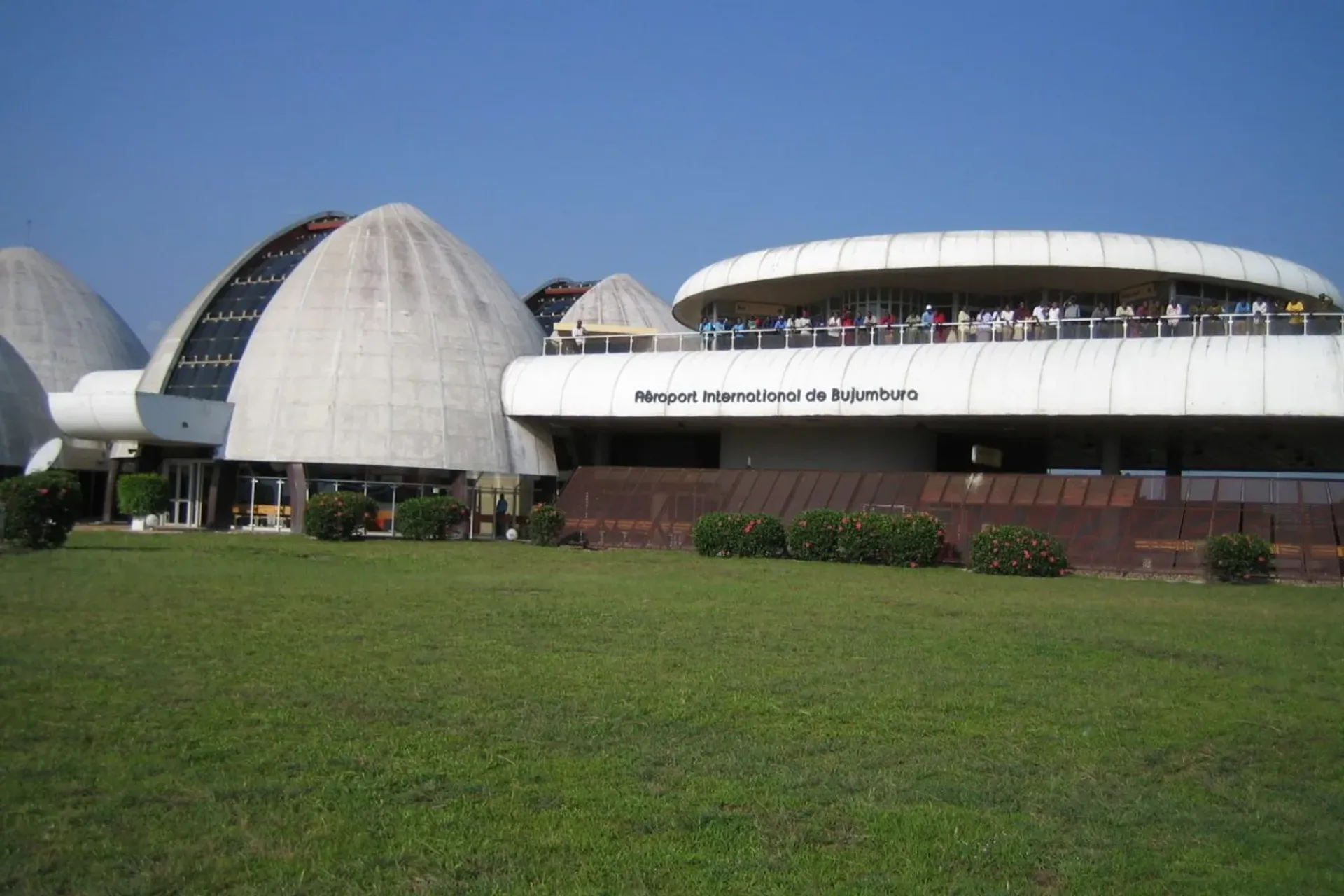
Most nationalities can obtain a visa on arrival (VOA) at Melchior Ndadaye International Airport (BJM) or at the major land borders (Kobero from Tanzania, Gasenyi/Nemba from Rwanda, Cibitoke from Congo DRC).
- Cost: USD 90 for 30 days (most nationalities)
- Documents needed: Passport valid 6+ months, return ticket, proof of accommodation
- Yellow fever certificate required if arriving from a yellow fever-endemic country
East Africa Bridge Tours can assist with pre-arrival documentation and pre-application letters upon request.
Getting to Burundi Solo
By air: Bujumbura (BJM) is served by:
- Kenya Airways from Nairobi (daily, ~1.5 hrs)
- Ethiopian Airlines from Addis Ababa (daily, ~2 hrs)
- RwandAir from Kigali (several times weekly, ~45 min)
- Flydubai from Dubai (several times weekly, ~4 hrs)
By land from Rwanda: The most popular overland route. Minibuses run Kigali → Bujumbura via Kayanza and the Gasenyi border (3–4 hours total). Book through any Kigali bus station. East Africa Bridge Tours offers private transfers with a local driver.
By land from Tanzania: Possible via the Kobero border point near Muyinga, but this route involves multiple vehicle changes and is best attempted with a guide or pre-arranged transport.
Solo Budget Breakdown (Per Day)
| Category | Budget | Mid-Range | Comfort |
|---|---|---|---|
| Accommodation | USD 25–40 | USD 60–90 | USD 120–200 |
| Meals | USD 10–15 | USD 20–35 | USD 40–70 |
| Local transport | USD 5–10 | USD 15–25 (tuk-tuk/moto) | USD 50+ (private car) |
| Park entry (Rusizi NP) | USD 10–20 | USD 10–20 | USD 10–20 |
| Guided half-day tour | USD 30–50 | USD 50–80 | USD 100+ |
| Daily total | ~USD 80–140 | ~USD 150–250 | USD 330+ |
Burundi is significantly cheaper than Rwanda and Uganda, particularly for accommodation and guided tours. Park entry fees are a fraction of regional costs.
Where to Stay in Bujumbura (Solo-Friendly)
Budget:
- Source du Nil Guesthouse — Clean, reliable, popular with backpackers and NGO workers. Central location near the market.
- Club du Lac Tanganyika — Older property but excellent waterfront access.
Mid-range:
- Saga Hotel — Good value, reliable Wi-Fi, safe car parking, near the diplomatic quarter.
- Hotel du Lac — Comfortable rooms with lake views.
Comfort:
- Panorama — The best-positioned hotel in the city for Lake Tanganyika views. Rooftop pool.
Best Things to Do Solo
1. Sunrise at Rusizi National Park (Half Day)
Rusizi NP begins just 15 km from Bujumbura CBD. A guided dawn walk along the Rusizi River delivers reliable hippo sightings, Nile crocodiles, and a remarkable array of waterbirds — including the rare shoebill in the right season. Solo entry requires a guide; East Africa Bridge Tours can arrange this as a standalone booking.
2. Watersports on Lake Tanganyika
The lake’s northern end near Bujumbura has calm, turquoise water ideal for swimming, kayaking, and snorkelling. Kigobe Beach and Saga Beach are the most popular solo-friendly spots. Lake Tanganyika is one of the few large African lakes where it is genuinely safe to swim (bilharzia-free in the northern sections).
3. Gitega Day Trip: Drums, Museum & Culture
Gitega, Burundi’s official capital since 2019, is 100 km inland from Bujumbura (approximately 2 hours by shared minibus or 1.5 hours by private car). The Gishora Drum Sanctuary hosts the UNESCO-listed Royal Drummers of Burundi — a performance unlike anything else in East Africa. The National Museum of Gitega displays ancient royal regalia and ethnographic collections.
4. Karera Waterfalls & the Source of the Nile
Near Rutana province, the Karera Falls cascade in four separate tiers through a dramatic gorge. The broader Rutana area contains one of the southernmost tributaries of the Nile — a fact that surprises most visitors and is entirely unvisited. A day trip from Bujumbura via 4WD takes approximately 4–5 hours each way.
5. Stanley–Livingstone Monument, Mugere
Just south of Bujumbura, a stone monument marks the site where Henry Morton Stanley is believed to have met David Livingstone on the shores of Lake Tanganyika in 1871. Low on tourist infrastructure, high on historical resonance.
Solo Female Travel in Burundi
Female solo travel in Burundi is practiced and manageable with standard precautions. Bujumbura has a visible urban population that is accustomed to foreign visitors. Harassment is less prevalent than in some neighbouring capitals, though lone female travellers should avoid walking alone after dark in city outskirts.
The guided tour model — which East Africa Bridge Tours strongly recommends for all travellers — provides a natural companion framework and removes the most common friction points.
Communication & Connectivity
- SIM cards: Econet (Leo) and Lumitel are the two main networks. SIM available at the airport for ~USD 2. Top-up cards widely available at roadside kiosks. Data bundles are affordable.
- Wi-Fi: Available in mid-range and above hotels, and in most city cafés in Bujumbura.
- Language: French and Kirundi. English is spoken in tourist areas and by transport operators, but less broadly than in Rwanda or Uganda. A few phrases of French go a long way.
Combining Burundi with Neighbouring Countries
Solo travellers often combine Burundi with Rwanda or Uganda. The most logical circuits:
- Burundi + Rwanda: Bujumbura → Kibira → Kigali → Volcanoes NP gorilla trek. 7–10 days. Excellent overland or combination of bus and guided transfer.
- Burundi + Tanzania: Bujumbura → Kigoma (Lake Tanganyika ferry or bush road) → Mahale Mountains chimp trekking.
- Full EAC circuit: Burundi → Rwanda → Uganda → Kenya → Tanzania. East Africa Bridge Tours offers this as a structured 14–21 day itinerary.
FAQ
Do I need vaccinations to enter Burundi? Yellow fever vaccination is required if arriving from an endemic country. Hepatitis A, typhoid, and malaria prophylaxis are strongly recommended. Consult a travel health clinic 6–8 weeks before departure.
What currency is used? Burundian Franc (BIF). USD is widely accepted at hotels, tour operators, and tourist sites. EUR is accepted at most hotels. ATMs are available in Bujumbura but may run out of cash — carry enough USD in small denominations.
Is Burundi part of the East African EAC single visa? Burundi is a member of the EAC but the East Africa Tourist Visa (EATV) currently covers Kenya, Uganda, and Rwanda only. Burundi requires its own visa.
What mobile apps are useful in Burundi? WhatsApp is the primary communication tool. Google Maps has reasonable coverage for Bujumbura and main roads. Offline maps via Maps.me are recommended for rural areas.
